For mid-market businesses in Australia and New Zealand, the key advantages of cloud ERP boil down to a few critical things: lower upfront costs, better access for remote and hybrid teams, and the flexibility to grow your operations without hitting a technology wall.
When you shift from expensive, high-maintenance on-premise servers to a subscription-based cloud model, you’re not just changing software. You’re freeing up cash and giving your team the power to access real-time data from anywhere, on any device.
So, What Are the Real Advantages of Cloud ERP?
Let’s cut through the jargon and talk about what this actually means for your business.
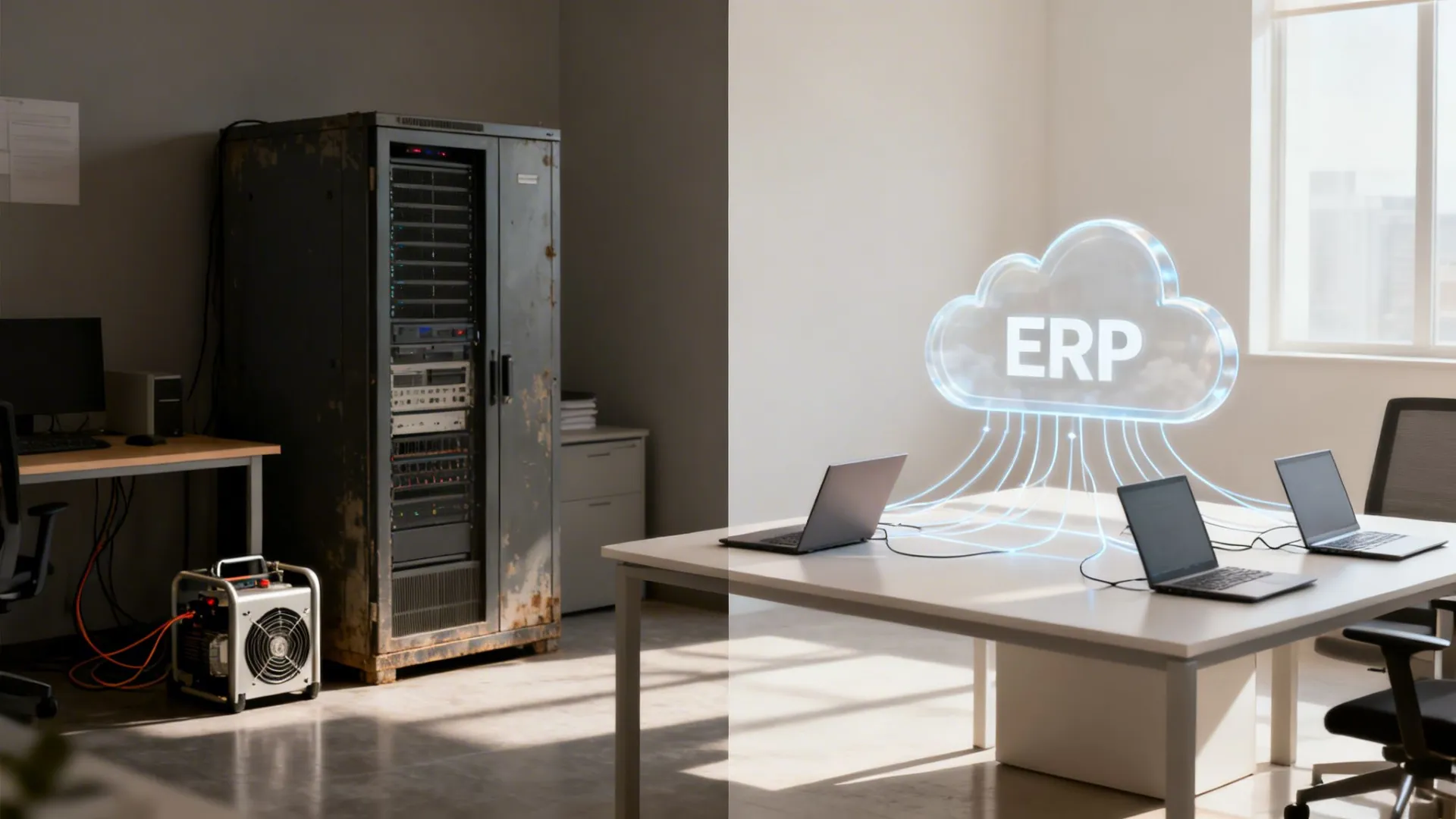
Think of your old on-premise system like owning a massive power generator in your backyard. It was a huge capital expense, it needs constant, specialised maintenance, and every time your power needs grow, you’re faced with another costly upgrade project. It’s a bottleneck.
Cloud ERP is like plugging directly into the national grid. You get reliable, scalable power on demand, and a team of experts handles all the complex infrastructure behind the scenes. As a trusted and experienced ERP partner for businesses across Australia and New Zealand, we at OneKloudX see this shift happening every day.
Here, we’ll unpack the real-world gains you can get from leading platforms like Oracle NetSuite, Epicor Kinetic, and MYOB Acumatica. At its core, a modern ERP is one of the most powerful forms of cloud IT services you can adopt.
To help you see the difference clearly, here’s a simple breakdown.
On-Premises ERP vs Cloud ERP At a Glance
The table below highlights the fundamental differences between the old way and the new, showing why so many growing businesses are making the switch.
| Attribute | On-Premises ERP | Cloud ERP |
|---|---|---|
| Initial Cost | High (hardware, software licences, facilities) | Low (subscription fees) |
| Pricing Model | Capital Expenditure (CapEx) | Operational Expenditure (OpEx) |
| Implementation | Long (6-18+ months) | Fast (1-6 months) |
| Accessibility | Limited to office network, difficult remote access | Anywhere with an internet connection |
| Maintenance | Managed by your internal IT team | Managed by the vendor (updates, security) |
| Scalability | Difficult and expensive to scale | Easy to add users, locations, and modules |
| Updates | Manual, disruptive, and costly projects | Automatic and seamless, included in subscription |
| Security | Dependent on your internal resources and expertise | Enterprise-grade, managed by dedicated security experts |
As you can see, the cloud model fundamentally changes the cost, risk, and effort involved in running a powerful business system.
The Shift from Capital Sink to Strategic Asset
Moving from an on-premise system to a cloud ERP is more than a tech upgrade; it’s a major strategic shift. It’s about moving away from tying up huge amounts of capital (CapEx) in servers and IT infrastructure and toward a predictable, manageable operating expense (OpEx).
For a growing mid-market business in Australia, this is a game-changer.
Instead of sinking funds into server rooms, cooling systems, and dedicated IT staff just to keep the lights on, that cash can be redirected into what actually grows your business: product development, market expansion, or hiring key people.
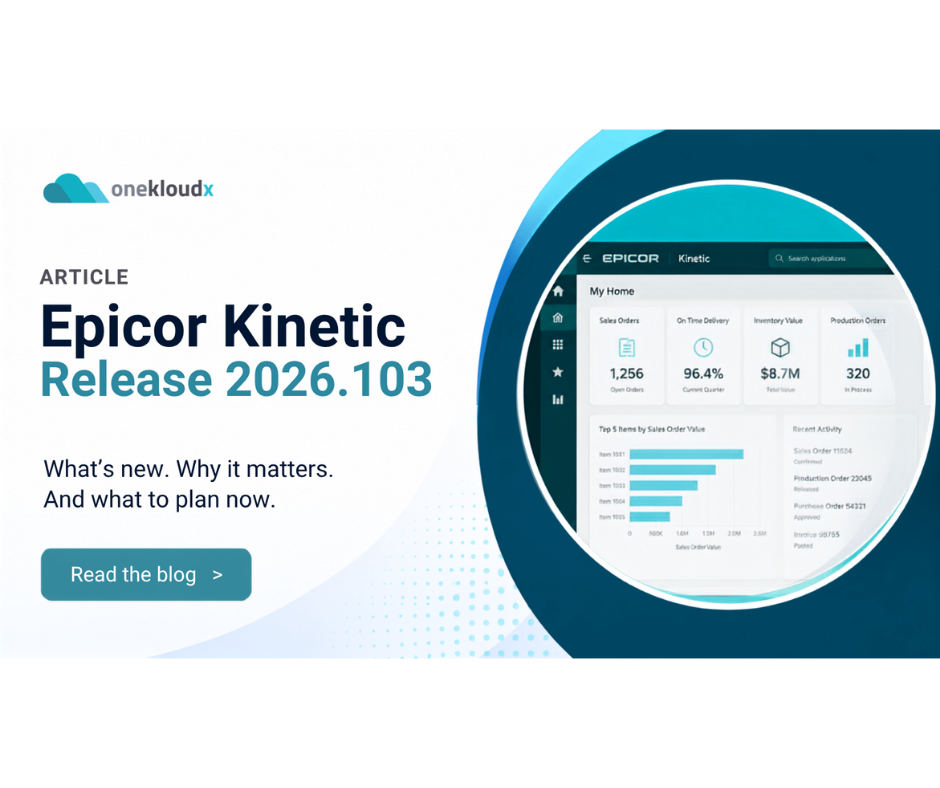
Epicor is a clear example of this shift in action. Through its cloud-native Epicor Kinetic platform, the company is actively helping its manufacturing and distribution customers step away from on-premises constraints and capture the agility, visibility, and scalability that cloud ERP makes possible.
Core Cloud ERP Advantages for Your Business
When you work with an experienced team like OneKloudX, you can unlock a whole host of benefits that touch every part of your organisation. The advantages go far beyond just saving money on servers.
- Reduced Total Cost of Ownership (TCO): You completely eliminate the need for expensive server hardware, annual maintenance contracts, and dedicated IT staff to manage your ERP infrastructure.
- Enhanced Accessibility and Collaboration: Your team gets access to the exact same real-time information, whether they’re in the office, on the road, or working from home. It breaks down the data silos that kill productivity.
- Automatic Updates and Innovation: The provider handles all system updates, security patches, and new feature rollouts automatically. You’re always on the latest, most secure version without any disruption or big internal projects.
- Superior Scalability: Your ERP grows right alongside you. Need to add new users, open a new branch, or expand internationally? It becomes a simple administrative task, not a massive IT headache.
Gain Financial Agility and Operational Unity
One of the first, most powerful advantages of a cloud ERP is its ability to unite your entire business on a single, real-time platform. For finance and operations leaders in Australia and New Zealand, this isn’t just an upgrade, it’s a fundamental shift away from fragmented data toward a unified view that changes how you manage and grow the company.
Think of your finance team right now. Are they wrestling with multiple spreadsheets, manually piecing together data from separate sales, inventory, and accounting systems? It’s a painfully slow and error-prone process. By the time the numbers are consolidated, they’re already out of date, making strategic decisions feel more like guesswork.
A Single Source of Truth for Financials
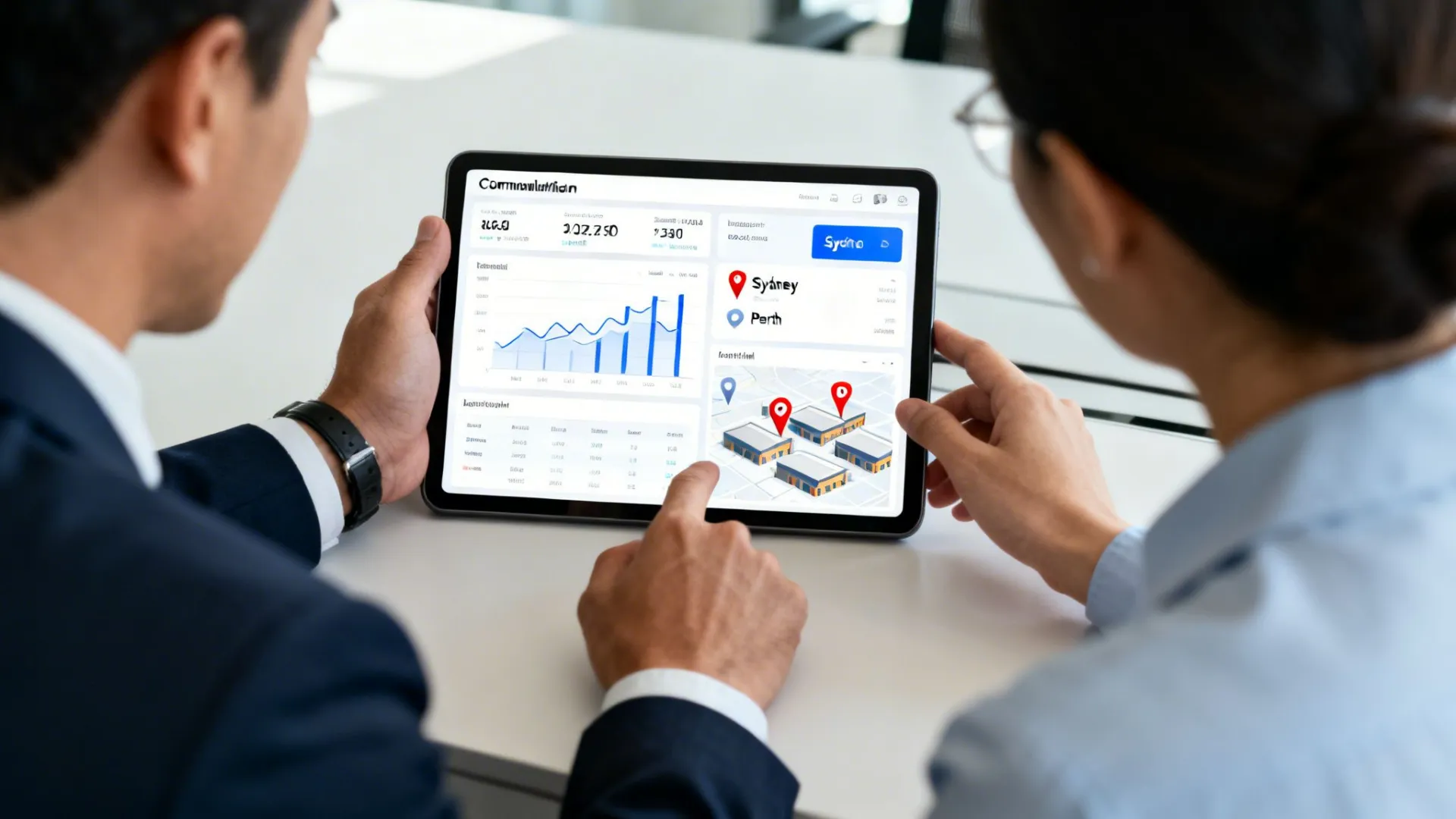
A modern cloud ERP like Oracle NetSuite or MYOB Acumatica establishes a single source of truth. Every transaction, from a sales order to a purchase receipt, is captured in one central system. This gives your CFO and finance team a live, consolidated view of financial health across the entire organisation. No more guessing.
This unified approach delivers very real benefits:
- Faster Financial Close: What once took weeks of manual reconciliation can now be done in days. With automated consolidations and real-time reporting, month-end becomes a streamlined process, not a dreaded ordeal.
- True Cash Flow Visibility: See your up-to-the-minute cash position, accounts receivable, and accounts payable across all business units. This clarity allows for far more accurate forecasting and proactive cash management, which is critical for navigating economic uncertainty.
- Simpler Compliance and Auditing: With a complete, unchangeable audit trail for every transaction, compliance becomes straightforward. Generating reports for Australian tax obligations or other regulatory requirements is faster and much more reliable.
For a CFO, closing the books faster is just the start. The real value is having trustworthy, real-time data to model scenarios, manage risk, and confidently guide business strategy. It turns the finance function from a historical scorekeeper into a forward-looking strategic partner.
As a trusted ERP partner, OneKloudX helps businesses make the most of these gains. We often work with leading finance automation partners like ProSpend, Zone&Co, Medius, and Zudello to further streamline accounts payable and expense management, making sure your technology delivers a powerful return.
Breaking Down Operational Silos
For a Chief Operating Officer (COO), data silos are the enemy of efficiency. When sales, inventory, and production teams all work from different systems, the result is poor communication, inaccurate forecasting, and missed opportunities.
A cloud ERP platform tears down these walls. It connects every part of your operation, ensuring decisions are based on shared, accurate data.
For instance, an Australian distributor running their business on a cloud ERP has real-time visibility into stock levels at both their Sydney and Melbourne warehouses. When a sales order comes in, the system automatically allocates stock from the best location, slashing stockouts and improving delivery times. This simple change led one of our clients to a 25% reduction in stockouts and a major lift in customer satisfaction. By understanding how a cloud ERP can enhance visibility, you can learn more about how it improves decision-making for C-level executives.
This operational unity is especially powerful for manufacturing businesses. A platform like Epicor Kinetic creates a seamless flow of information from sales forecasts right through to the shop floor, optimising production schedules and materials purchasing. It finally connects the front office to the back office, creating a responsive and agile operation.
Ultimately, by unifying your financials and operations, a cloud ERP gives you the agility to adapt quickly to market changes and the solid foundation needed to scale your business with confidence.
Unlock Industry-Specific Manufacturing and Distribution Gains
Generic, one-size-fits-all software just doesn’t cut it for the complex realities of manufacturing and distribution. For these sectors, one of the most compelling advantages of a cloud ERP is getting access to purpose-built tools that solve specific operational headaches, turning technology into a genuine competitive edge.
Let’s be honest, old on-premise systems can’t keep up. They create walls between the shop floor and the front office, leading to all-too-familiar problems: inaccurate inventory, production delays, and decisions based on outdated information. Modern cloud ERPs are designed to tear those walls down.

As an experienced ERP partner for businesses across Australia and New Zealand, we at OneKloudX see it firsthand. Platforms like Epicor Kinetic, Oracle NetSuite, and MYOB Acumatica deliver the specialised functionality these industries need not just to compete, but to thrive.
Real-Time Control for Manufacturers
For Australian manufacturers, the gains are immediate and tangible. Epicor is a clear example of this shift. Its cloud-native Epicor Kinetic platform is actively helping manufacturers and distributors leave the limitations of on-premise systems behind, finally capturing the agility and visibility that only a true cloud ERP can offer.
Imagine a local Australian food and beverage manufacturer. Using the advanced Manufacturing Execution System (MES) within Epicor Kinetic, they can monitor production lines live, track machine performance as it happens, and verify quality control with every single batch. This isn’t just about being more efficient; it’s about protecting their brand and meeting strict local compliance standards.
These systems provide the tools to manage everything from bill of materials (BOM) and routing to job costing with precision. A modern ERP also brings clarity to the unique financial challenges of the sector, such as the intricacies of accounting for manufacturing.
The move to the cloud is no longer a future trend; it’s a present-day reality for any savvy operator. As noted by Gartner, for Australian mid-market manufacturers and distributors in 2026, cloud ERP adoption is projected to account for over 70% of all new implementations.
The data makes a critical point: businesses still delaying their cloud transition are at serious risk of being outmanoeuvred by more agile, data-driven competitors. At OneKloudX, as a trusted ERP partner, our deep expertise in platforms like Epicor Kinetic and Oracle NetSuite ensures you can actually implement and benefit from these advanced MES and product configurator tools, not just read about them.
Optimising the Distribution Lifecycle
For distributors, the game is all about moving goods from A to B as efficiently and cost-effectively as possible. This is where cloud ERP creates a seamlessly integrated logistics network, optimising the entire pick, pack, and ship cycle from start to finish.
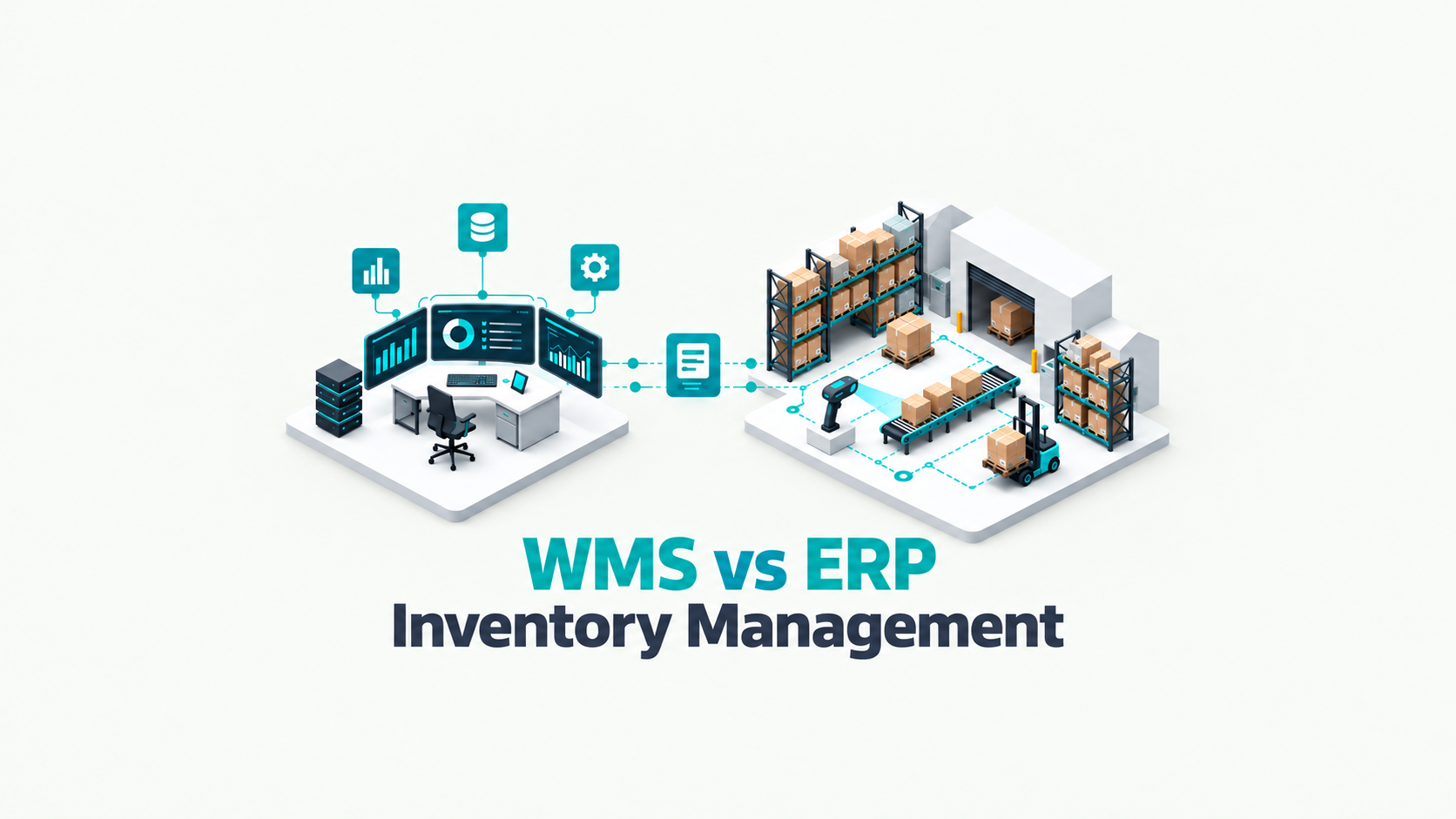
This is often achieved by connecting the core ERP with specialist Warehouse Management System (WMS) solutions from expert partners. For example, by integrating an ERP like MYOB Acumatica with a powerful WMS from 3DLogistiX or CartonCloud , an Australian distributor can:
- Automate order processing: Orders from every channel flow directly into the WMS, instantly generating optimised pick lists for warehouse staff.
- Improve inventory accuracy: Real-time scanning and tracking all but eliminate picking errors and provide an exact, live view of stock levels, preventing overselling.
- Accelerate fulfilment: Integrated shipping and freight management tools from partners like FernSpeed ensure the fastest and most cost-effective delivery routes are chosen automatically.
On top of that, integrating advanced supply chain planning tools is crucial. A solution like Netstock connects directly to your ERP, using intelligent forecasting to prevent stockouts and slash excess inventory. This is how you turn your supply chain from a cost centre into a strategic asset. If you want to dive deeper into this, our detailed ERP for manufacturing guide is a valuable resource.
By using these industry-specific cloud ERP advantages, Australian and New Zealand manufacturers and distributors can build more resilient, efficient, and profitable operations. It’s all about getting the right information into the right hands at the right time.
Build a Fully Connected and Automated Business
The real power of a modern ERP isn’t realised until it stops being an accounting system and becomes your business’s central nervous system. A cloud ERP’s biggest advantage is its ability to create a single, automated hub where information flows freely between all your critical applications. This is what ends the soul-crushing cycle of manual data entry, fixes costly mistakes, and frees your people to do work that actually matters.
Not long ago, getting different software to talk to each other was a complex and brutally expensive project. That’s changed. Modern cloud platforms are built with open Application Programming Interfaces (APIs), which are basically universal adapters that let different systems communicate without a fuss.
The Power of a Connected Ecosystem
This connectivity gets a massive boost from powerful Integration Platform as a Service (iPaaS) solutions. As an experienced ERP partner for Australian and New Zealand businesses, we use tools from leaders like Workato, Celigo, Boomi, and Jitterbit to build these connected environments for our clients. These platforms make linking your systems faster and far more reliable than old-school custom coding ever was.
Think about your lead-to-cash process. By integrating Oracle NetSuite with a CRM like HubSpot or Salesforce, the workflow becomes flawless. When your sales team closes a deal in the CRM, the customer record, sales order, and invoice details are automatically created in NetSuite. No one has to lift a finger. Suddenly, sales, finance, and operations are all working from one accurate view of the customer.
This isn’t just about saving a few hours. It’s about creating a frictionless experience for your customers and giving your finance team a real-time view of revenue as it happens. A connected system makes sure the promises your sales team makes are promises your operations team can actually keep.
Here’s another powerful example: linking an ERP like MYOB Acumatica with your e-commerce platform and an EDI provider like SPS Commerce. For a wholesaler or distributor, this is a game-changer. Online orders flow straight into the ERP, inventory is updated instantly, and shipping data is automatically exchanged with major retail partners. The entire fulfilment cycle runs on its own.
From Automation to Hyperautomation
But building a connected business is about more than just syncing data, it opens the door to truly intelligent automation. By plugging your ERP into specialist solutions, you can put entire business functions on autopilot.
- Automated Expense Management: Connect your ERP with tools from ProSpend, Webexpenses, Expensify, or Medius. Staff can submit expenses from a mobile app, which are then automatically routed for approval and paid, with every bit of data synced to the right general ledger accounts.
- Streamlined AP and Procurement: Link up with partners like Coupa, Lightyear, or Zudello to automate your entire accounts payable process, from capturing an invoice and matching it three ways to getting approvals for payment.
- Intelligent Payroll and HR: Integrate with HR platforms like KeyPay or ELMO to make sure employee data, timesheets, and payroll information are perfectly synchronised with your financials, eliminating painful month-end reconciliations.
The next step is hyperautomation, which uses artificial intelligence and machine learning to automate more complex, end-to-end processes. We work with innovative partners like Cauzzy AI to analyse the massive amounts of data flowing through your connected systems. This can pinpoint bottlenecks, predict problems before they happen, and even suggest process improvements on its own.
Your ERP is no longer just a system of record; it becomes an engine for continuous improvement. By building this fully connected and automated enterprise, you don’t just get more efficient. You build a smarter, more agile, and more resilient business that’s ready for whatever comes next.
Strengthen Security, Compliance, and Future-Proof Scalability
For any business leader in Australia or New Zealand looking at a new ERP, two big questions always come up: Is my data safe? And can this system actually grow with us? These are valid concerns. But with a modern cloud ERP, what feels like a risk is actually one of the biggest reasons to make the switch.
Let’s be honest, a mid-market business simply can’t afford the same level of security as a global cloud provider. Companies like Oracle, Epicor, and MYOB invest millions into dedicated security teams, sophisticated threat detection, and physically secure data centres. That enterprise-grade protection, with its 24/7 monitoring and rapid patching, is baked right into the service.
Simplifying Australian Compliance
Beyond fending off cyber threats, a huge advantage of cloud ERP is how it handles compliance. Keeping up with ever-changing regulations can feel like a full-time job. With a cloud platform, the vendor shoulders most of that burden.
A perfect example is Australia’s Payday Super legislation, which comes into effect on 1 July 2026. This requires businesses to manage superannuation payments far more frequently. Instead of a frantic internal project, platforms like Oracle NetSuite, Epicor Kinetic, and MYOB Acumatica will simply roll out an update. Your payroll, often managed through integrations with partners like KeyPay, stays compliant automatically. The same goes for data sovereignty, as these providers maintain local Australian data centres.
At OneKloudX, we don’t treat security as an afterthought. Our FlexSafe methodology is designed to build your solution to meet all relevant compliance and security standards from the very beginning.
Effortless Scalability for Future Growth
The most strategic advantage of a cloud ERP is how it scales. It’s a platform built not for the business you have today, but for the one you want to be in five or ten years. You can see this shift in the numbers; the Australia and New Zealand cloud computing market is expected to reach USD 13.31 billion by 2026. This isn’t just a trend; it’s businesses actively seeking unified systems that support both their growth ambitions and local compliance needs. For a deeper dive into these market forces, you can read the full research on the ANZ cloud computing market.
To put it in real terms, think of a growing Australian retailer looking to expand from five stores to twenty-five.
- With an on-premise system: This triggers a painful, expensive, and disruptive IT project. You’re buying new servers, overhauling network infrastructure, and rolling out complex software, all while hoping it doesn’t bring operations to a standstill.
- With a cloud ERP: The process is shockingly simple. Adding new users, stores, or even entire business units becomes an administrative task, often as easy as changing your subscription. The system grows with you, not against you.
This is what we mean by “future-proofing.” It’s the ability to grow without friction. You can chase new market opportunities, acquire another company, or launch a new product line, confident that your core technology won’t just keep up, it will actively enable your strategy.
Epicor is a clear example of this shift in action. Through its cloud-native Epicor Kinetic platform, the company is actively helping its manufacturing and distribution customers step away from on-premises constraints and capture the agility, visibility, and scalability that cloud ERP makes possible. Your ERP stops being a barrier to growth and becomes your engine for it.
Your Roadmap to Cloud ERP Success with OneKloudX
Knowing the benefits of a cloud ERP is one thing. Actually turning that knowledge into a successful, business-wide transformation is another challenge entirely. For growing Australian and New Zealand businesses, the path to a modern, unified system starts with an honest look at where you are today and a sharp vision for where you need to be.
This is where OneKloudX comes in. We are a trusted, experienced ERP partner that doesn’t just sell you software; we guide you through a structured process designed to deliver real, measurable value from the moment you go live.
Start with an Honest Assessment
You can’t choose the right solution if you haven’t diagnosed the real problem. The first step, always, is taking a hard look at your current operations. Where are the bottlenecks? Where are the data silos and frustrating manual workarounds holding your teams back?
We walk you through this with our initial discovery sessions and ERP health checks. This isn’t a sales pitch. It’s a genuine, collaborative effort to map your specific pain points and pin down the exact operational and financial gains a new system must deliver. Getting this foundation right is critical, as we detail in our guide on the key steps to prepare for a successful ERP implementation.
Our Architecture-Led Approach
Once we have a clear picture of your unique needs, we move to our architecture-led Discovery & Solution Design methodology. This is where our deep expertise as a trusted partner for Oracle NetSuite, Epicor Kinetic, and MYOB Acumatica becomes so important. We don’t force a platform on you; we map your specific business requirements to the system that provides the best fit, ensuring the technology serves your strategy, not the other way around.
The right implementation partner is just as important as the software itself. A successful project depends on a partner who understands your industry, challenges your assumptions, and designs a solution that is built for your future, not just your present.
The infographic below shows how a well-designed cloud ERP builds foundational benefits in a logical flow, creating a stable platform for growth.
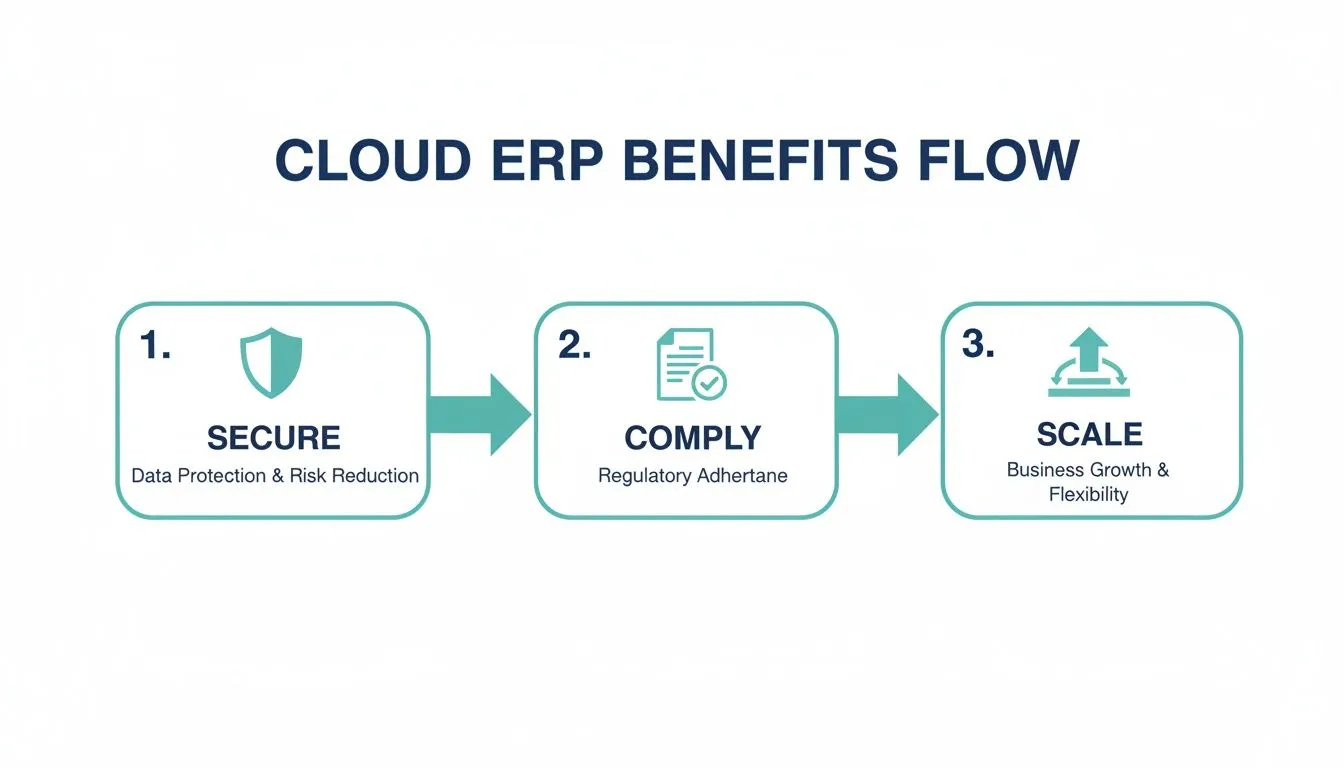
It’s a simple but powerful sequence. First, you secure your data and processes. This creates a solid foundation to meet your compliance obligations easily. In turn, that stability gives you the confidence and capability to scale your operations without breaking things.
Guaranteed Success with FlexSafe
With the right solution designed, we get to work on the implementation using our FlexSafe methodology. This isn’t just a project plan; it’s a proven approach designed to deliver your project 30% faster while guaranteeing a safer, on-budget result. By focusing intensely on people, process, and risk reduction, we eliminate the uncertainty and budget blowouts that plague so many technology projects.
Your business transformation is too important to leave to chance. Book an ERP health check or discovery call with the OneKloudX team today, and let’s start building your roadmap to a more agile, efficient, and profitable future.
Your Pressing Cloud ERP Questions, Answered
When you’re considering a move to cloud ERP, the big-picture benefits are clear. But it’s the practical, on-the-ground questions that really matter. As trusted ERP partners, we hear the same handful of concerns from business leaders across Australia and New Zealand, so let’s tackle them head-on.
1. How Long Does an ERP Implementation Really Take?
This is the big one. We’ve all heard horror stories of on-premise projects dragging on for 12 to 18 months, burning through cash and patience. A major advantage of modern cloud ERP is that those timelines are ancient history.
But speed isn’t automatic. As an experienced implementation partner, we developed our FlexSafe methodology for a reason. It’s a structured approach that delivers projects for platforms like Oracle NetSuite, Epicor Kinetic, and MYOB Acumatica up to 30% faster than traditional methods. We do this by starting with pre-configured industry best practices and managing risks before they become roadblocks, not after.
2. How Does Cloud ERP Handle Australian Data Security Laws?
This is a non-negotiable, and rightly so. It’s also an area where cloud ERP platforms offer a massive advantage over trying to manage security yourself. Leading providers like Oracle, Epicor, and MYOB operate highly secure data centres right here in Australia. This ensures your data stays onshore, meeting all local data sovereignty laws from day one.
These vendors invest millions in enterprise-grade security, far more than any single mid-market business could justify. We’re talking advanced encryption, 24/7 threat monitoring, and bulletproof disaster recovery protocols. Partnering with OneKloudX means we design your setup to meet every compliance standard, making the cloud a genuinely more secure option.
3. Is It a Nightmare to Integrate Other Software?
Quite the opposite. In fact, easy integration is a core reason to move to a modern cloud ERP. Old on-premise systems were notoriously difficult to connect, creating data silos and manual workarounds. Modern platforms are built with open APIs, which are like universal adapters for your software.
This is where the right partner makes all the difference. Using powerful iPaaS (Integration Platform as a Service) tools from specialists like Workato, Celigo, or Boomi, we build a connected business ecosystem. This isn’t just about linking two systems; it’s about creating a real-time, seamless flow of information between your ERP, CRM, warehouse management system, and e-commerce store. The result is a single source of truth that you can actually trust.
4. Will We Be Forced into Updates We Don’t Want?
This is a common myth that comes from a misunderstanding of how cloud updates work. While you do receive regular updates packed with new features and security patches, a huge benefit, you are always in control of the process.
Vendors provide a “sandbox” environment first. This is an exact copy of your system where you can thoroughly test the update’s new functionality. Your team gets to see how everything works and ensure it won’t disrupt daily operations before it ever touches your live system. This gives you the best of both worlds: continuous innovation without the risk.
Ready to transform your business with a system built for growth? The team at OneKloudX are expert ERP implementation partners for Australian and New Zealand businesses. Book an ERP health check or discovery call to start building your roadmap to a more agile, efficient, and profitable future.