Spreadsheets still run a surprising number of distribution businesses. One file tracks stock by warehouse. Another estimates landed cost. Finance closes the month from the accounting system, while sales keeps its own view of customer pricing and backorders. It works, until it doesn’t.
The breaking point usually isn’t dramatic. It shows up as stock that looks available but isn’t, margin questions nobody can answer quickly, GST concerns during month-end review, and managers spending too much time reconciling information that should already agree. That’s the point where distributor ERP software stops being an IT discussion and becomes an operating model decision.
Your Guide to Distributor ERP Software in Australia
Australian distributors don’t operate in a niche market. The wholesale sector is broad, operationally complex, and closely tied to inventory, logistics, and working capital. The Australian Bureau of Statistics recorded 82,309 wholesale trade businesses in the 2023–24 financial year, and wholesale trade generated $1,152.8 billion in annual turnover, as noted in this distribution ERP market reference. For a COO, that scale matters because it explains why distribution-focused ERP has become standard infrastructure rather than a specialist add-on.
A distribution business usually outgrows basic tools in stages. First, stock visibility gets fuzzy across locations. Then order processing starts relying on email, rekeying, and workarounds. Finally, finance becomes the clean-up crew, trying to reconcile inventory, purchasing, freight, rebates, and sales commitments after the fact.
The signal that your business has outgrown its tools
You’re probably already seeing some version of this:
- Inventory answers vary by team: Sales, warehouse, and finance each trust different data.
- Margin analysis takes too long: Landed cost, supplier changes, and discounting sit outside the core system.
- Month-end depends on heroics: Key people manually fix issues that software should have prevented.
- Growth adds friction, not efficiency: New branches, entities, or channels increase complexity faster than control.
Most distributors don’t buy ERP because they want more software. They buy it because the current stack no longer gives management a reliable version of the truth.
The practical role of distributor ERP software is straightforward. It connects purchasing, inventory, warehousing, order management, and financials so operational activity and financial outcomes sit in the same system. That’s what turns “what happened?” into “what do we do next?”
For Australian and New Zealand businesses, the better question isn’t “Do we need ERP?” It’s “What type of ERP will handle our stock, our finance controls, and our local reporting realities without forcing more spreadsheets around the edges?”
What Is Distributor ERP Software, Really?
Distributor ERP software is best understood as the central operating system for a business that buys, stores, moves, and sells physical goods. It isn’t just accounting with extra screens. It’s the platform that connects a purchase order, a warehouse receipt, a customer order, a pick slip, an invoice, and the resulting financial postings into one chain of activity.
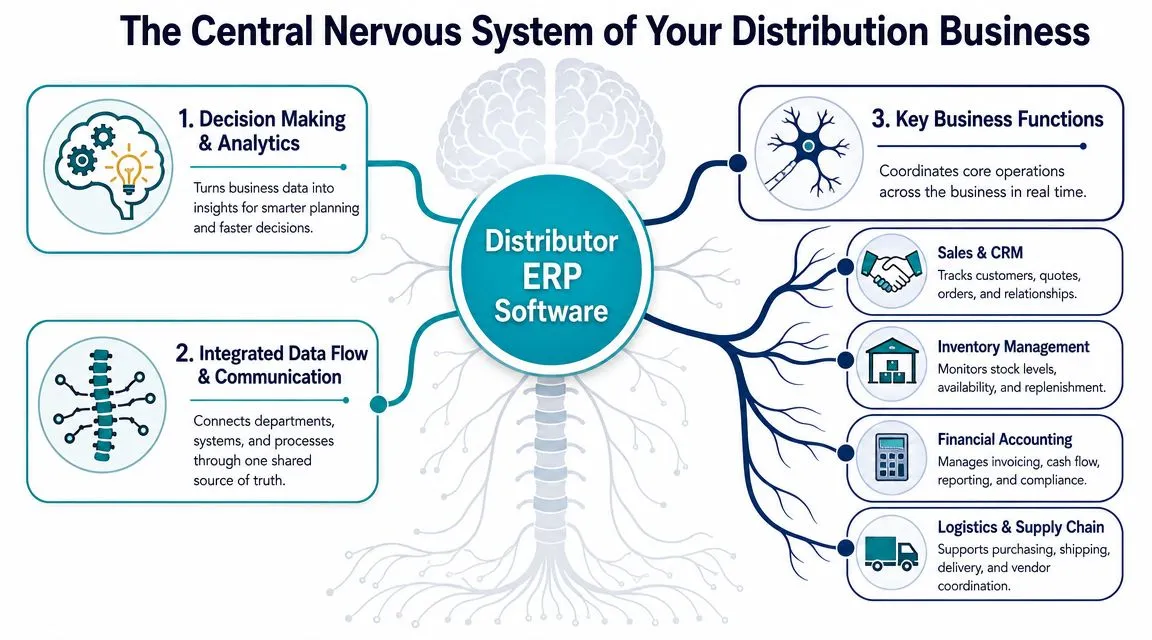
A generic ERP can handle broad business functions. A distribution-focused ERP handles the buy-stock-sell model with the detail distributors need, such as multi-location inventory, supplier purchasing, order allocation, fulfilment logic, and stock-aware financial reporting. If you want a plain-English overview of the cloud model behind modern systems, Cloudvara cloud ERP insights are a useful companion read.
The four connected pillars
A capable distribution ERP usually stands on four tightly linked areas:
| Pillar | What it does in practice |
|---|---|
| Financials | Posts operational activity into the ledger with auditability, so finance isn’t rebuilding the story later |
| Inventory and warehouse | Tracks stock by item, location, status, and movement, not just total quantity |
| Sales order management | Connects quotes, orders, allocations, shipments, invoices, and customer-specific terms |
| Procurement | Manages supplier pricing, replenishment, purchase orders, receipts, and cost impact |
The point isn’t that each module exists. Most software can claim that. The point is whether these functions work as one process.
What this changes day to day
In a disconnected environment, a buyer raises a purchase order, the warehouse receives stock into a separate system, finance journals the result later, and sales still isn’t sure what can be promised. In a proper distributor ERP, those are linked transactions. The system knows what was ordered, what arrived, what is committed, and what the stock movement means financially.
That’s why platforms such as Oracle NetSuite, Epicor Kinetic, and MYOB Acumatica are frequently shortlisted by mid-market distributors. They give the business a common data model across operations and finance, which is what most growing distributors are missing.
If your current software tells finance one story and the warehouse another, you don’t have a reporting problem. You have a systems design problem.
Essential Features Your Distributor ERP Must Have
Feature lists often mislead buyers. They reward breadth, not fit. A distributor should separate essential requirements from capabilities that offer future benefits.
The core features that should not be optional
Start with the functions that stop operational leakage.
- Real-time multi-location inventory visibility: The system needs to show what is on hand, committed, in transit, and available by location. If your team still exports stock to spreadsheets to make allocation decisions, the ERP isn’t doing the job.
- Unified order management: Quote, order, pick, dispatch, invoice, and credit processes should sit in one flow. This improves customer service, as staff can answer availability and order status without checking three systems.
- Purchasing and supplier control: Buyers need live visibility into supplier orders, expected receipts, pricing changes, and replenishment signals.
- Integrated financial controls: Every stock and order movement should post cleanly into financials with traceability. That matters for margin analysis, month-end, and audit readiness.
A quick test helps here. Ask a vendor to show how one item moves from purchase receipt to customer shipment to invoice to general ledger impact. If the answer relies on manual imports or side systems, expect ongoing reconciliation effort.
The features that create operating leverage
Once the foundation is sound, some capabilities start delivering disproportionate value.
Australian warehouse and distribution operators face a structurally tight labour market, with the national unemployment rate at 4.1% in April 2026, which makes labour-saving functions such as barcode-directed receiving and automated replenishment materially valuable, as described in this distribution ERP feature analysis.
That matters because labour pressure changes the economics of automation. In practical terms, look for:
- Warehouse execution tools: Barcode scanning, directed putaway, guided picks, and mobile warehouse transactions reduce manual handling and exception chasing.
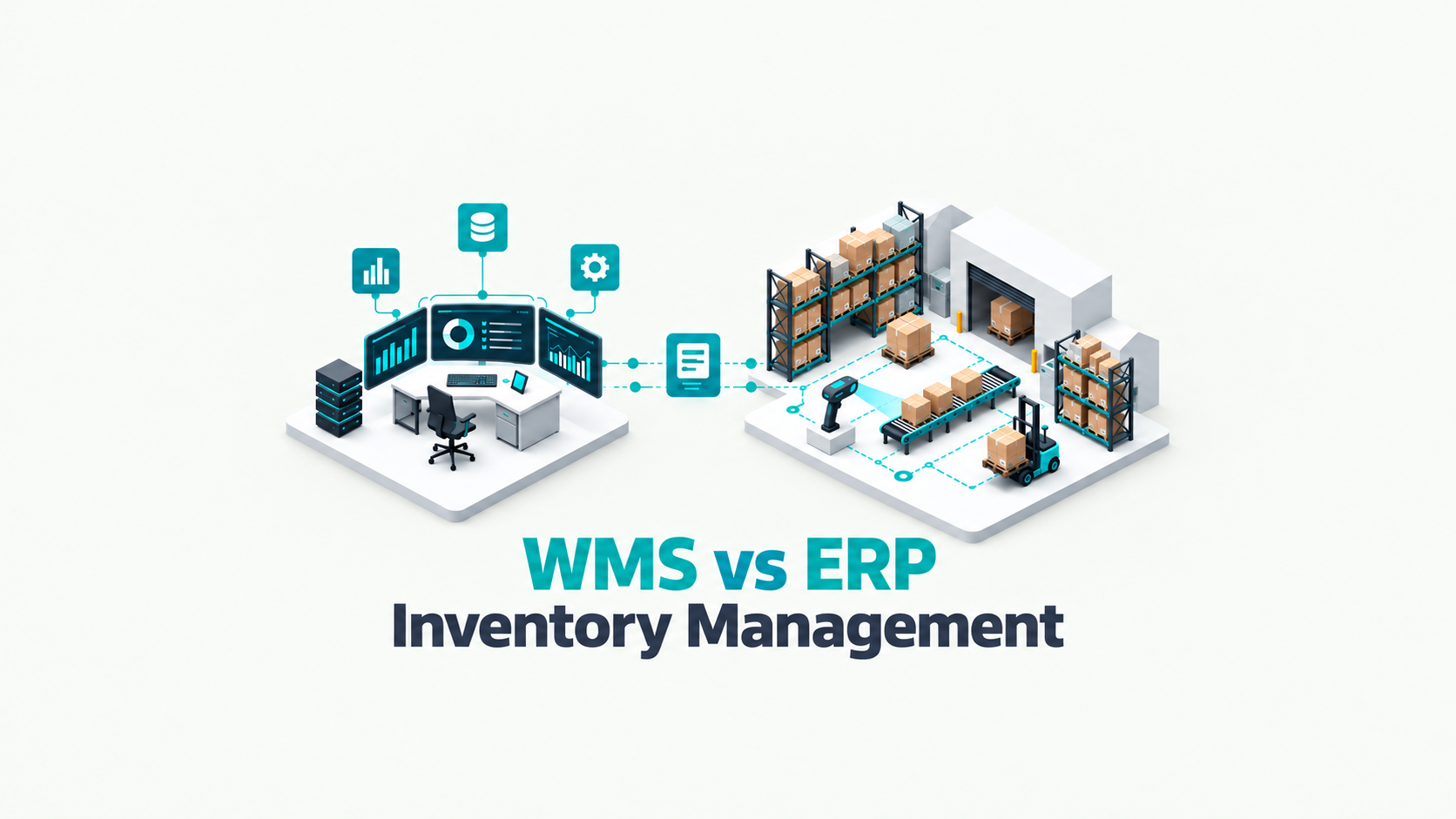
- Demand planning: Add-ons such as Netstock help distributors improve replenishment discipline when SKU counts and supplier lead times make basic min-max rules too blunt.
- Landed cost tracking: If you import, this is critical. Freight, duty, and related charges need to roll into item cost with far less manual intervention.
- Integration-ready architecture: Distribution businesses rarely run ERP alone. They connect to freight tools, ecommerce, payroll, expense platforms, and customer portals.
- Decision support and analytics: Tools such as Cauzzy AI can help teams surface trends, anomalies, and decision cues faster, provided the underlying ERP data is reliable.
For a practical example of how wholesale distributors think about NetSuite capabilities, this NetSuite update for wholesale distributors is worth reviewing.
A useful way to prioritise requirements
Use this split during selection workshops:
| Priority level | Include when |
|---|---|
| Day-one must have | The function replaces a current pain point or control weakness immediately |
| Phase-two value | The function becomes useful after process standardisation |
| Nice to have | Helpful in demos, but not material to the business case |
Practical rule: Don’t buy advanced forecasting, AI reporting, or workflow automation on top of broken item masters, weak warehouse discipline, or poor chart-of-accounts design. Advanced tools amplify good process and expose bad process.
The Real Business Case and ROI of Distributor ERP
The business case for distributor ERP software is rarely about software consolidation alone. It’s about running a distribution business with fewer blind spots.
A good ERP improves decisions in four places that matter to a COO and CFO. First, it tightens inventory control, which affects working capital. Second, it speeds the order-to-cash cycle by reducing handoffs. Third, it gives finance cleaner cost and margin visibility. Fourth, it supports more consistent customer service because availability and fulfilment status are clearer.
To understand why ERP is now a mainstream operating platform in distribution, it helps to look at adoption and buying patterns. International market research indicates that the vast majority of wholesalers and distributors now use ERP software, that implementation budgets vary significantly by business size and complexity, and that meaningful ERP ROI typically takes around 2.5 years to materialise, as detailed in this ERP market overview for distribution companies. Note that cost benchmarks in this source are drawn from international markets and should be used as indicative guidance rather than direct ANZ comparisons.
A strong business case should set expectations accordingly. ERP isn’t a quick cosmetic upgrade. It’s an operating and financial control investment with a medium-term payback profile.
For a grounded view of cost planning, this ERP total cost of ownership guide is a useful reference during business case development.
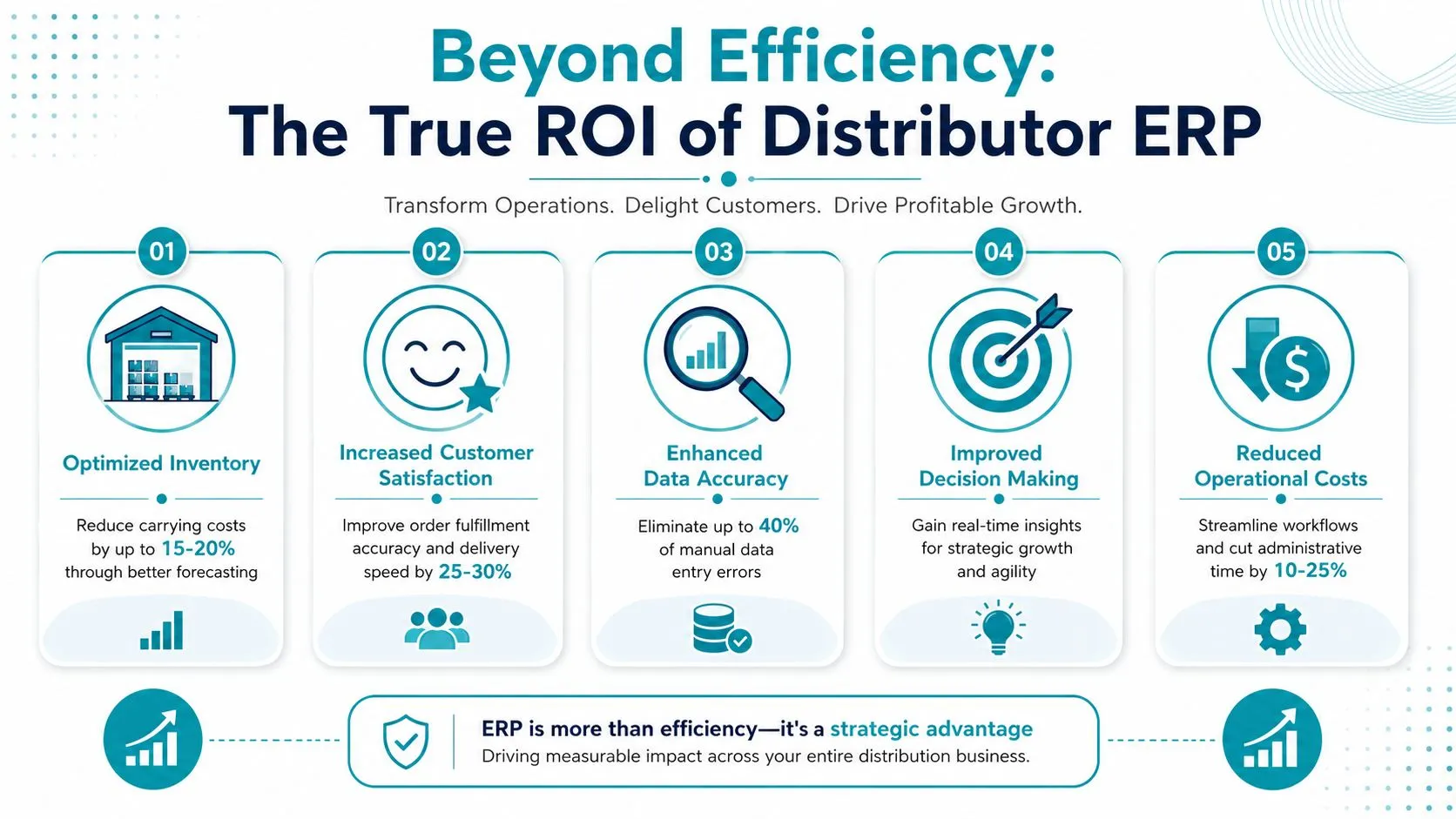
Here’s a visual way to frame the return:
What good ROI usually looks like operationally
The biggest gains often come from problems that don’t sit neatly on one line of the P&L:
- Cleaner purchasing decisions: Buyers stop ordering from partial information.
- Faster exception handling: Staff spend less time chasing pricing, stock, and shipment discrepancies.
- Better gross margin understanding: Finance can trace cost impacts with less spreadsheet reconstruction.
- Improved service consistency: Sales and customer service can commit with more confidence.
This walkthrough adds another perspective on business value in ERP-led operations:
The most common ROI mistake is building the case around labour savings only. That’s too narrow. For distributors, the larger value often sits in lower error rates, cleaner cash conversion, stronger pricing discipline, and fewer finance risks.
Key Selection Criteria for Australian Distributors
Australian and New Zealand distributors should screen ERP options differently from generic mid-market businesses. Inventory matters, but compliance and finance design often decide whether the system functions in production.
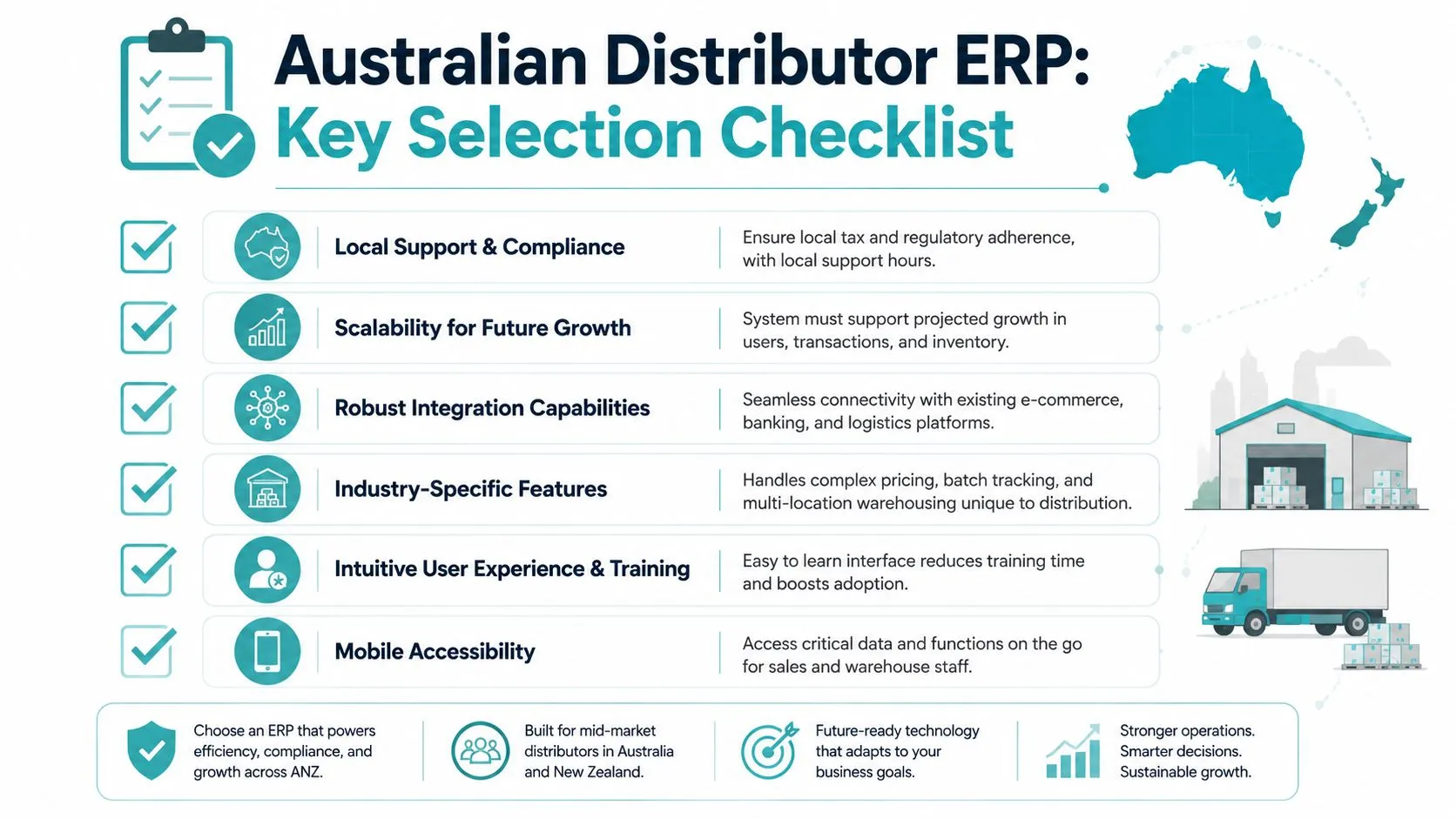
A major underserved angle in ERP selection is Australian compliance. Many guides focus on inventory, but for many mid-market distributors the primary value lies in reducing finance and compliance risk from spreadsheets and disconnected systems, especially around GST and BAS data integrity, as discussed in this Australian distribution ERP compliance perspective.
What to test in demonstrations
Don’t ask vendors only for a warehouse tour. Ask them to prove local operating fit.
-
GST and BAS readiness
Can the platform support tax handling and reporting processes cleanly, with strong transaction traceability? Generic “financials” claims aren’t enough. -
Audit trail depth
Can finance trace a transaction from source document through approvals, postings, adjustments, and user actions without relying on offline evidence? -
Multi-entity capability
This matters if you trade through multiple entities, run separate branches with distinct reporting needs, or operate across Australia and New Zealand. -
Inventory cost clarity
Can your team see what stock is costing the business in a way that aligns with how management reviews margin?
The local realities generic shortlists miss
A distributor in Brisbane with one warehouse and straightforward imports needs something different from a business running national branch stock, field sales, ecommerce orders, and a New Zealand entity. Yet many evaluations still focus on broad feature scorecards.
A better shortlist looks at operational fit in context:
| Selection area | Questions worth asking |
|---|---|
| Local compliance | How will GST treatment, BAS preparation, and audit evidence work in daily operations? |
| Entity structure | Will the platform cope with multiple entities, currencies, and intercompany flows without heavy workaround design? |
| Warehouse scale | Can it support your current warehouse model and future branch or 3PL expansion? |
| Industry fit | Does it handle distributor realities such as pricing complexity, replenishment, and stock commitments? |
| Integration depth | How easily will it connect to payroll, ecommerce, WMS, CRM, and AP automation tools? |
For platform comparison work, this ANZ ERP comparison covering NetSuite, MYOB Acumatica, and Epicor Kinetic helps frame trade-offs in an Australian context.
The right ERP for a distributor isn’t the one with the longest feature list. It’s the one that can hold together stock, finance, tax, and operational control without forcing your team back into spreadsheets.
One practical option in this market is OneKloudX, which works with Oracle NetSuite, Epicor Kinetic, and MYOB Acumatica, alongside ecosystem tools such as CartonCloud, Workato, Celigo, Netstock, and finance automation solutions. That kind of architecture-led approach matters because the ERP decision is rarely just about the core platform. It’s about the operating model around it.
ERP Implementation and Critical Integrations
ERP projects fail less often because of missing features than because of weak execution. A strong platform with poor process design, unclear ownership, and messy integration logic will still create frustration.
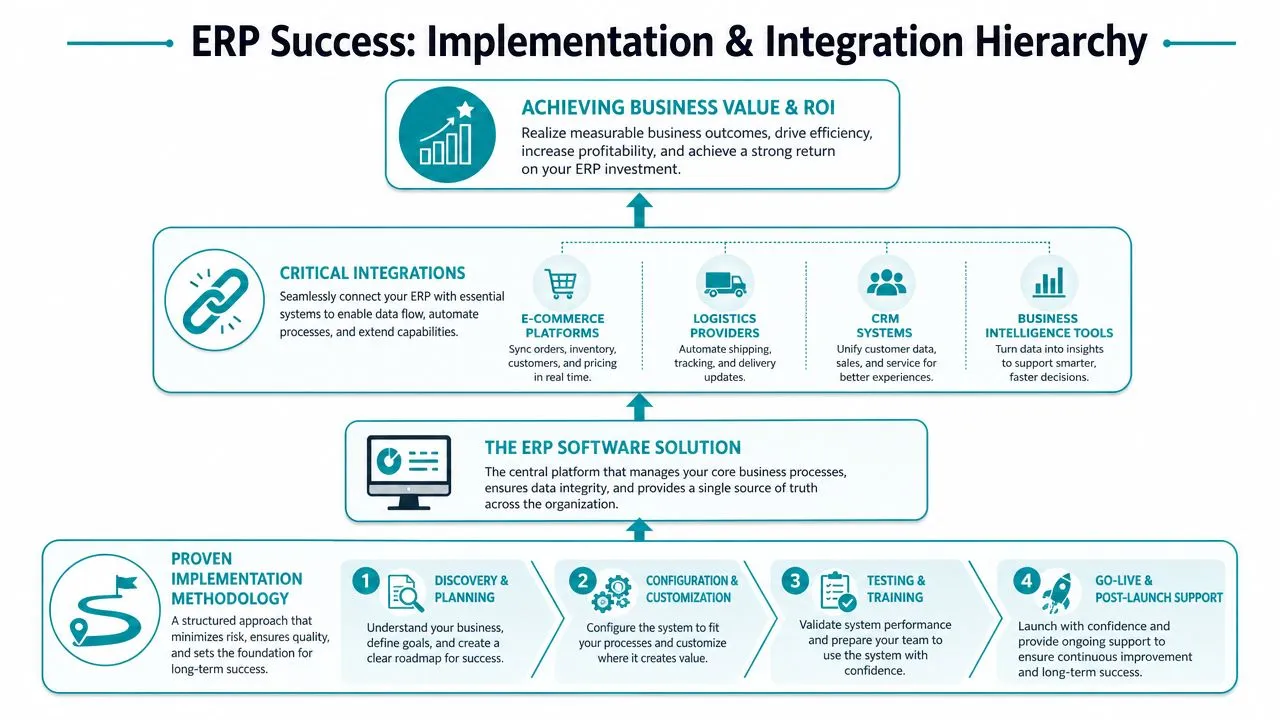
Implementation discipline matters more than most teams expect
The first implementation mistake is trying to preserve every historical workaround. The second is underestimating master data cleanup. The third is treating user training as a final-stage task instead of part of process design from the beginning.
A better rollout usually includes:
- Discovery and process mapping: Document how purchasing, receiving, allocation, fulfilment, invoicing, and month-end work today.
- Control-point design: Decide where approvals, audit evidence, segregation of duties, and exception handling must sit.
- Data readiness: Clean customers, suppliers, items, pricing, tax codes, chart of accounts, and open transactions before migration.
- Role-based training: Warehouse teams, finance, customer service, and buyers need scenario-based training, not generic screen tours.
The ERP should be the hub, not the whole stack
Most distributors still need specialist tools around the core ERP. That isn’t a weakness. It’s usually the right design.
Examples that work well in practice include:
- Warehouse and logistics extensions: 3DLogistiX, CartonCloud, and FernSpeed for execution-heavy warehouse or freight processes
- Finance automation: ProSpend, Medius, Zudello, Lightyear, and BlackLine for AP, reconciliations, and spend control
- Integration platforms: Workato, Celigo, Boomi, and Jitterbit to keep data moving reliably between systems
- CRM and commercial systems: HubSpot or Salesforce where customer relationship workflows sit outside ERP
- People systems: KeyPay and ELMO where payroll or HR processes need a dedicated layer
If ecommerce is part of your channel mix, mastering Shopify ERP integration is a helpful reference on the integration considerations that usually surface once order volumes grow.
A practical implementation question beats a polished demo question every time: “Show me what happens when a receipt is short, the supplier invoice arrives with extra freight, and finance needs the cost impact visible before month-end.”
Your Next Steps: A Checklist for Success
If you’re evaluating distributor ERP software now, keep the next steps simple and disciplined.
A short checklist that saves time later
- Build a cross-functional team: Include operations, warehouse, finance, customer service, and IT. ERP decisions fail when one department writes the requirements for everyone else.
- Document pain points in business terms: Don’t write “need better visibility”. Write “sales cannot confirm available stock without checking warehouse” or “finance uses spreadsheets to prepare margin analysis”.
- Separate must-haves from future-state ideas: This keeps demos grounded and prevents attractive but non-essential features from driving the shortlist.
- Test local finance and compliance scenarios: Include GST handling, BAS-related reporting outputs, audit trails, approvals, and multi-entity needs.
- Map your integrations: List ecommerce, freight, payroll, AP automation, CRM, WMS, and reporting tools before solution design starts.
- Assess implementation readiness: Data quality, process ownership, executive sponsorship, and internal capacity matter as much as software choice.
The best ERP projects usually start with a business process review, not a product demo. That gives you a cleaner view of where the actual problems sit and which platform design will solve them without creating fresh complexity.
If your distribution business is carrying too much process risk in spreadsheets, disconnected systems, or manual finance controls, OneKloudX can help you assess fit, clarify requirements, and design an ERP approach around Australian and New Zealand operating realities.