
ERP Optimisation & Continuous Improvement
Get more value from your ERP without replacing it
Unlock Hidden Value
Stop paying for unused features
Continuous Improvement
Not one-time projects
Proven ROI
Average 30% efficiency gain

NetSuite
Unlock advanced NetSuite capabilities you are not using. SuiteFlow automation, saved search optimization, SuiteAnalytics dashboards, SuiteBilling automation.
Common optimisations:
- Replace Excel reports with SuiteAnalytics
- Automate approval workflows with SuiteFlow
- Optimize slow saved searches
- Activate unused SuiteApps
- Build custom KPI dashboards
Epicor kinetic
Maximize your Epicor Kinetic investment. BPM automation, BAQ optimisation, advanced MES activation, product configurator setup.
Common optimisations:
- Simplify overcomplicated BPM directives
- Optimize BAQ performance
- Activate Advanced MES features
- Automate shop floor data collection
- Build executive dashboards
MYOB Acumatica
Get more from MYOB Acumatica. Generic inquiry optimisation, business event automation, workflow automation, advanced reporting.
Common optimisations:
- Build efficient generic inquiries
- Automate processes with business events
- Replace manual workflows with automation
- Optimise system performance
- Create custom dashboards
You went live months or years ago. The system runs. But deep down, you know it could do more.
Reports still need manual cleanup. Approvals happen in email. Month-end takes too long. Your team complains about clunky workflows. Meanwhile, you are paying for functionality you have never touched.
ERP Optimisation turns that frustration into opportunity. We help you unlock the value already sitting in your system without expensive upgrades or replacements.
6 Optimisation Focus Areas
What ERP Optimisation Delivers
We focus on high-impact improvements that deliver measurable results
Workflow Automation
Eliminate manual steps in order-to-cash, procure-to-pay, month-end close. Build approval workflows, automated notifications and scheduled processes.
Reporting & Analytics
Replace Excel exports with real-time dashboards. Build role-based KPIs. Automate financial consolidation and management reporting.
Performance Tuning
Optimise slow searches and reports. Clean up data bloat. Streamline customisations. Get your system running fast again..
Integration Enhancement
Strengthen connections between your ERP and other systems. Automate data sync. Eliminate double-entry and reconciliation headaches.
User Adoption & Training
Address workarounds. Provide targeted training. Simplify complex processes. Get your team actually using the system properly.
Feature Activation
Turn on functionality you already own but never configured. Advanced manufacturing, planning and budgeting, warehouse management, approvals.
6 Optimisation Focus Areas
What ERP Optimisation Delivers
We focus on high-impact improvements that deliver measurable results

Step 1: Identify Opportunities
We work with your team to identify friction points, manual workarounds, underused features and performance issues.
What we assess:
- User pain points and workarounds
- Manual processes that should be automated
- System performance bottlenecks
- Unused modules and features
- Reporting and analytics gaps

Step 2: Prioritise for Impact
We rank opportunities by business impact versus implementation effort. Quick wins first, complex improvements planned for later.
Our prioritisation matrix:
- High impact, low effort = Do now (Quick Wins)
- High impact, high effort = Plan carefully (Strategic)
- Low impact, low effort = Do if capacity allows
- Low impact, high effort = Defer or skip

Step 3: Implement Improvements
We deliver optimisations in focused sprints. Each sprint targets 2-4 specific improvements. You see results every 2-3 weeks.
Typical sprint deliverables:
- Automated workflows or approvals
- New reports or dashboards
- Performance improvements
- Training for new features
- Documentation updates

Step 4: Measure & Refine
We measure the impact of each improvement. Time saved, errors reduced, user satisfaction improved. Then we plan the next sprint.
What we track:
- Time savings (hours per week/month)
- Error reduction (accuracy improvements)
- User satisfaction (adoption metrics)
- ROI (cost savings vs investment)
Two-Track Approach
Quick Wins vs Strategic Improvement
We deliver both. Quick wins build momentum, strategic improvements transform operations.
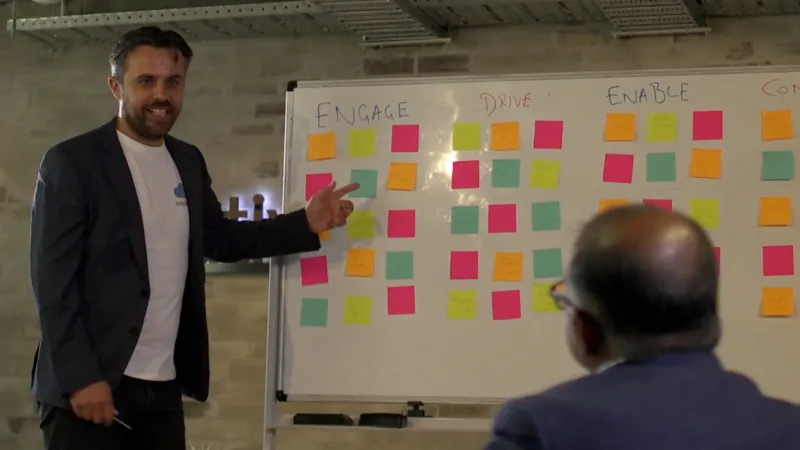
TRACK 1: QUICK WINS (0-30 DAYS)
Characteristics:
- Low implementation effort
- Immediate impact
- Minimal disruption
- High visibility
Examples:
- Automate invoice reminder emails
- Build month-end close checklist dashboard
- Activate unused approval workflows
- Fix slow-running reports
- Create executive summary dashboards
Typical ROI: 5-10 hours saved per week
TRACK 2: STRATEGIC IMPROVEMENTS
(30-90+ DAYS)
Characteristics:
- Requires planning and testing
- Transforms processes
- Higher complexity
- Significant long-term impact
Examples:
- Implement NetSuite Planning & Budgeting
- Activate Epicor Advanced MES
- Build integrated order-to-cash automation
- Implement warehouse management
- Create consolidated financial reporting
Typical ROI: 20-50 hours saved per week

ROI & Business Case
The Business Case for ERP Optimisation
Average Results (based on 100+ optimisation projects)
30%
Average efficiency improvement
15 hours
Average weekly time savings
6 months
Average payback period
3-5×
Typical ROI in first year
When You Need Optimisation
Is ERP Optimisation Right for You?





























Optimisation vs Other Services
How Optimisation Fits Your Needs
Choose the Right Service