
There is a particular kind of energy at a technology conference when the conversation stops being about what is coming and starts being about what is already here. SuiteConnect 2026 had that energy, both in Melbourne and Sydney.
For those of us who spend our days helping businesses evaluate, implement, and optimise ERP systems, the signals coming out of this event were not subtle.
They were a clear and direct message to mid-market finance and operations leaders: the ground has shifted, and the organisations that do not move with it will feel the cost.
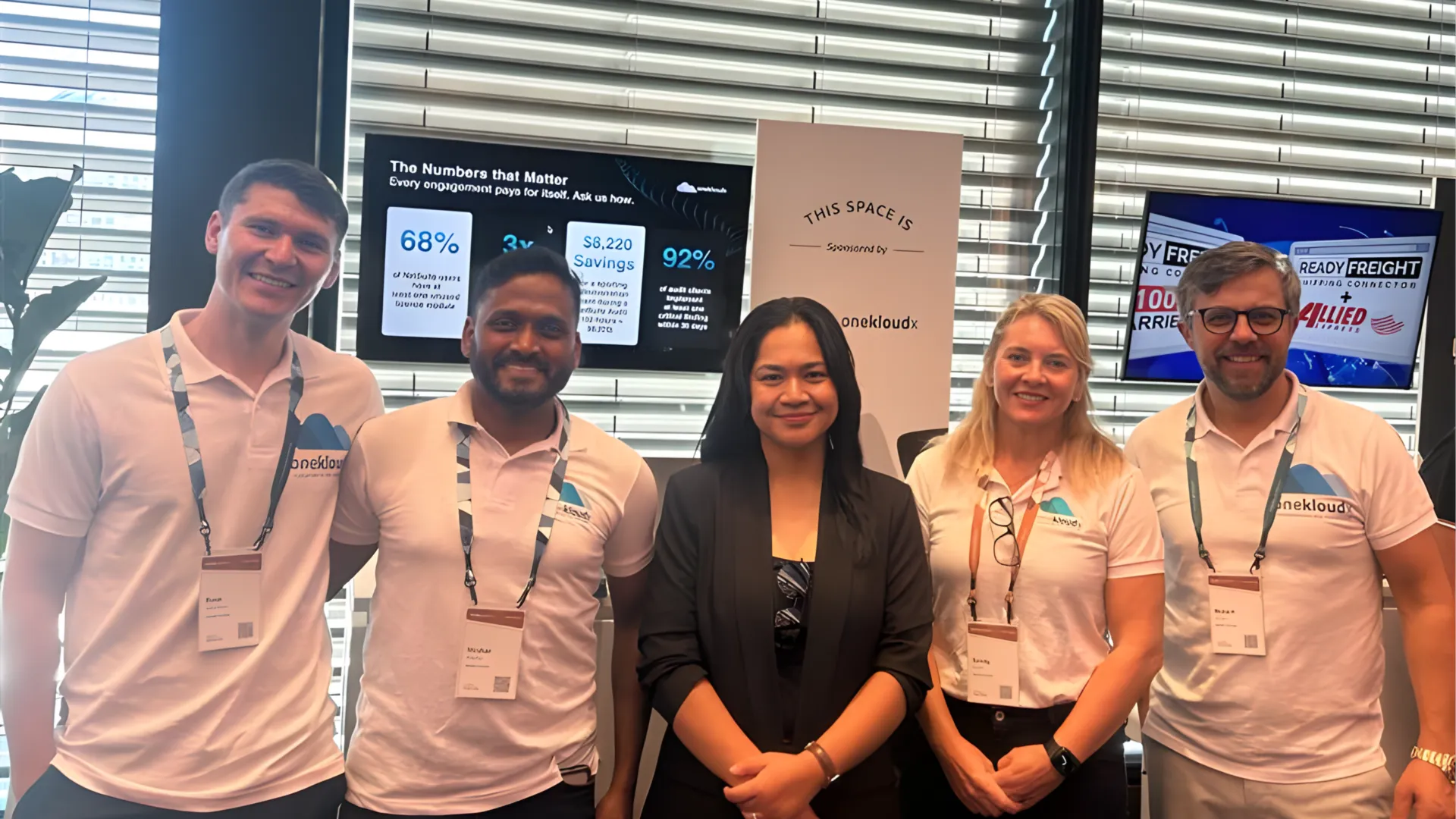
AI is not a feature. It is the architecture.
Oracle NetSuite has rebranded its AI-embedded platform as NetSuiteNext, and the critical point here is that this is not a roadmap item or a beta programme. It is live across finance and operational workflows, and it is expected to reach Australian customers within the next six months. That timeline matters. The businesses that start preparing their data foundations now will be the ones who actually benefit from the capability when it lands.
That brings me to what I believe was the most underappreciated conversation at SuiteConnect: data quality. Every AI-driven insight, every automated reconciliation, every variance explanation depends entirely on the integrity of the data model sitting underneath it. Organisations with fragmented, inconsistent, or poorly governed data will find that AI does not solve their problems; it amplifies them. Clean, unified data is not a nice-to-have. It is the entry price for the next generation of ERP value.
Finance is finally getting the attention it deserves.
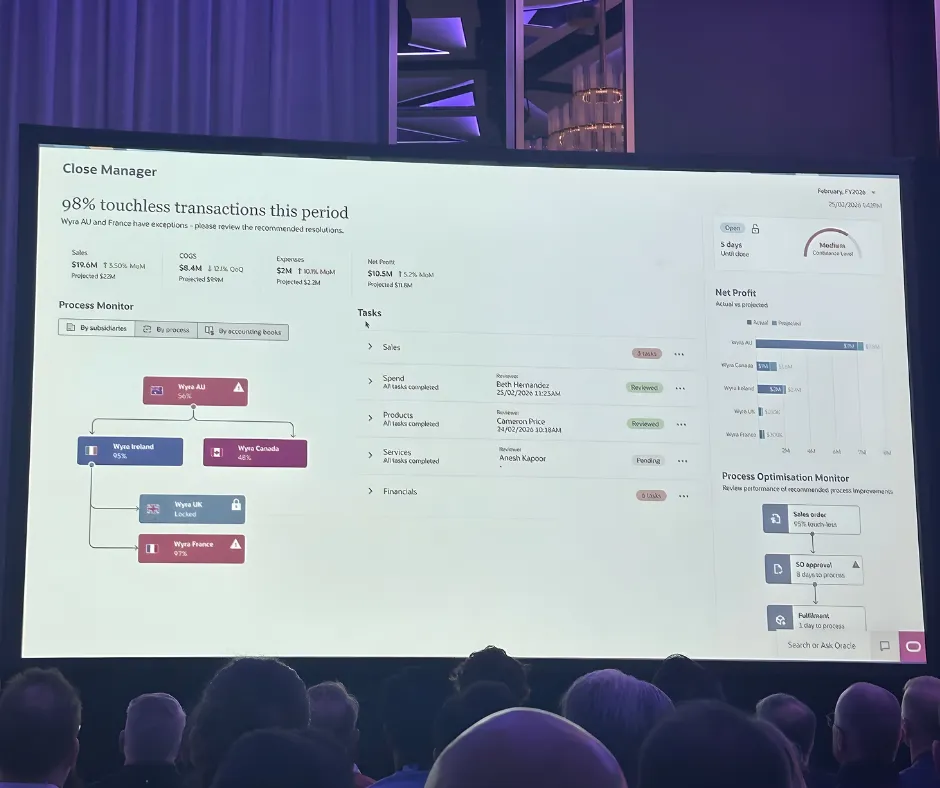
For years, ERP conversations in the mid-market have centred on operations, supply chain, and inventory. SuiteConnect 2026 made it clear that finance is now the primary ROI driver, particularly around the close cycle, reconciliation, and cash visibility.
The concept of the monthly close is itself under pressure. The direction of travel is towards continuous, automated finance, where reconciliations happen in real time and the close becomes a reporting event rather than a labour-intensive process. Real-time reporting is no longer a competitive advantage; it is an expectation. Boards and leadership teams are increasingly unwilling to make decisions on information that is weeks old, and rightly so.
Scaling without headcount is no longer theoretical.
One of the most commercially significant themes at this year’s event was the number of businesses describing how they have grown revenue and complexity without growing their finance or operations teams at the same pace. ERP, used well, is functioning as a margin protection lever. Automation is absorbing transaction volume that would previously have required additional hires.
This is not about replacing people. It is about redirecting skilled professionals away from low-value, repetitive work and towards analysis, judgement, and strategy. The organisations achieving this are treating their ERP not as a system of record but as an active operational asset.
Planning is no longer a calendar event.
Rolling forecasts and scenario modelling were prominent throughout the agenda, and for good reason. The expectation that a business can set an annual plan in October and navigate the following twelve months from it has been tested repeatedly over the past several years. Continuous planning, supported by real-time data and AI-assisted scenario modelling, gives leadership teams the agility to respond to conditions as they change rather than discovering the impact at quarter-end.
The ecosystem is the conversation.
It would be a mistake to view NetSuite as a closed system. The SuiteApps ecosystem, including partners such as Zone and Co, featured prominently in discussions, and the message was consistent: the most sophisticated NetSuite implementations are not just core ERP deployments. They are thoughtfully assembled ecosystems where specialist tools extend and enhance the platform for specific use cases.
For businesses evaluating or re-evaluating their ERP landscape, this is important context. The question is not only whether NetSuite can do something; it is whether the right combination of native capability and ecosystem tools can deliver the outcome efficiently and at scale.
The bottom line
SuiteConnect 2026 was not a product showcase dressed up as an industry event. It was a genuine reflection of where the mid-market ERP conversation has arrived. AI is embedded, finance automation is accelerating, and the businesses taking this seriously are pulling ahead.
If you are currently running a NetSuite environment or considering one, now is the right time to assess whether your data foundations, your processes, and your partner ecosystem are positioned to take advantage of what is now available, not just what is coming.
We work with businesses across this journey every day.
If SuiteConnect raised questions for your team, we are glad to help you work through them.
Curious about NetSuite?
NetSuite is a full, cloud-based enterprise resource planning (ERP) suite that gives organisations what they need to run efficiently and accelerate seamless scalable growth. Supporting over 42,000 customers in 219 countries and territories worldwide, NetSuite has everything you need to grow, in one place, on a single cloud platform.
If you are considering an ERP solution, take a look at what we do, how we got here, and how NetSuite works. Our FlexSafe methodology ensures that every NetSuite implementation is meticulously executed that is transparent, collaborative and increases user adoption by reducing change resistance. We have a proven track record of success in business access, process expertise, and providing scalable cloud solutions.
Our award-winning team helps you make the most of NetSuite, so you can focus on what really matters – your customers, your people, and your business.
Schedule a demo time in our calendar, or if you want more information call us on 1800 155 683.