Choosing an Enterprise Resource Platform (ERP) system is one of the most consequential decisions a growing business will make. Get it right, and you have a platform that scales with you, connects every part of your operation, and gives your leadership team the visibility they need to make smart decisions. Get it wrong, and you’re looking at years of costly workarounds, frustrated staff, and a system that holds you back rather than moves you forward.
The three platforms that come up most often for Australian mid-market businesses are NetSuite, MYOB Acumatica, and Epicor Kinetic. Each is a genuine, enterprise-grade solution with a strong local presence and a track record of successful implementations. But they are not interchangeable, and the right choice depends entirely on who you are as a business, how you operate, and where you’re headed.
This guide breaks down each platform honestly, so you can walk into any ERP conversation with the clarity and confidence to make the right call.
Why “Which ERP Is Best?” Is the Wrong Question
It’s tempting to go looking for a definitive ranking: first place, second place, third. But ERP selection doesn’t work that way, and any partner worth their salt will tell you the same thing.
Think of it like choosing a vehicle. A ute is the right tool for a tradie on a worksite. A semi-trailer is the right tool for a long-haul freight operator. A Sprinter van serves a catering business perfectly. None of them is universally superior; they’re built for different jobs.
The same logic applies here. NetSuite, MYOB Acumatica, and Epicor Kinetic are each exceptional within the context they were designed for. The goal of this guide is to help you figure out which vehicle matches your road.
NetSuite: Built for Businesses That Move Fast and Scale Globally
What it Is
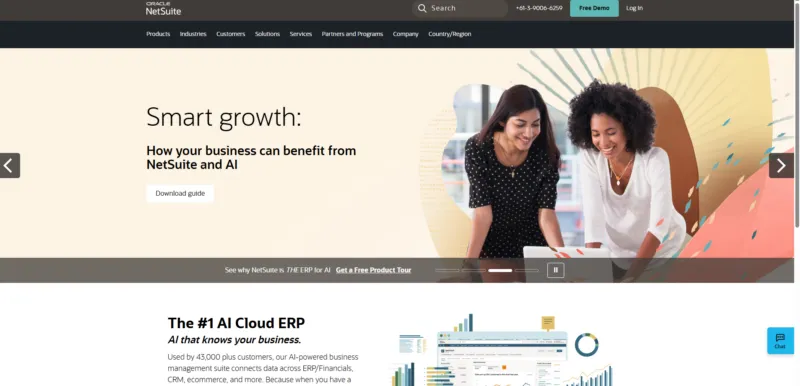
NetSuite, developed by Oracle, is a cloud-native ERP platform that has become a go-to for high-growth businesses, professional services firms, software companies, and multi-entity organisations. It operates entirely in the cloud, with no on-premise option, and is designed to manage complexity across multiple subsidiaries, currencies, and geographies from a single instance. More than 43,000 organisations globally run on the platform today.
Where NetSuite Excels
NetSuite’s strongest suit is its financial management capability. The platform handles multi-currency transactions, consolidated reporting across entities, revenue recognition, and compliance with accounting standards in a way that few mid-market systems can match. For a business with subsidiaries in Australia, New Zealand, the United States, or Singapore, NetSuite provides a single source of financial truth without the pain of manually reconciling between separate systems.
Its SuiteCommerce capability also makes it a strong option for product businesses that sell both wholesale and direct-to-consumer, connecting inventory, fulfilment, and financials into one environment.
The ecosystem is broad. NetSuite has a large partner and developer network, meaning specialist modules exist for industries from manufacturing to non-profit, and integration with third-party tools is generally well-supported.
Where to Think Carefully
NetSuite is a platform that rewards investment. Licensing, implementation, and customisation costs can climb quickly, particularly when businesses add modules or require complex configurations. It is not the lightest option to get off the ground, and implementation timelines reflect that.
Businesses that are heavily manufacturing-focused, with complex shop floor management, production scheduling, or MES (Manufacturing Execution System) requirements, often find that NetSuite’s manufacturing functionality, while capable, is not as purpose-built as dedicated manufacturing ERPs.
NetSuite Is a Strong Fit For
- High-growth businesses with plans to scale regionally or internationally
- Professional services, SaaS, and technology companies
- Businesses managing multiple legal entities or subsidiaries
- Organisations where financial control and consolidation is the primary pain point
- E-commerce and retail businesses requiring integrated order management
Explore OneKloudX’s NetSuite practice
MYOB Acumatica: The Australian-Backed Platform Built for Local Mid-Market Businesses
What It Is
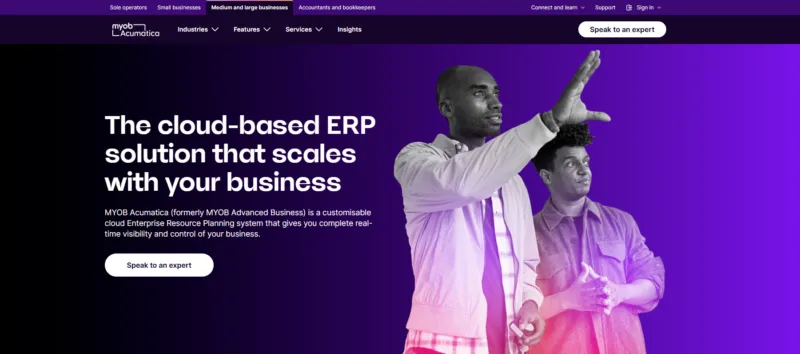
MYOB Acumatica (formerly MYOB Advanced) is a cloud ERP built on the Acumatica platform, offered and supported locally by MYOB, one of Australia’s most recognised business software brands. It is designed specifically for the Australian and New Zealand mid-market, with strong localisation for GST, BAS reporting, payroll, and compliance requirements that matter to businesses operating in this region. MYOB has been Acumatica’s exclusive ANZ partner for over a decade, a relationship that was further formalised and rebranded in July 2024.
Where MYOB Acumatica Excels
Local compliance is where MYOB Acumatica earns its place at the table. Australian tax obligations, Single Touch Payroll (STP), and BAS reporting are handled natively, without the workarounds that businesses sometimes need with internationally developed systems. For a business that prioritises getting local compliance right from day one, this matters enormously.
The platform covers a wide range of industries including wholesale distribution, retail, manufacturing, and project-based businesses. Its distribution and inventory management capabilities are particularly well-regarded, making it a strong option for businesses moving goods across complex supply chains.
MYOB Acumatica’s consumption-based licensing model is also worth noting. Unlike some platforms that charge per user, the model is based on transaction volume and resource consumption, which can be a significant cost advantage for businesses with large teams that all need system access.
Where to Think Carefully
MYOB Acumatica’s strength is the mid-market, and it is optimised for that segment. Businesses with very complex multinational operations or highly specialised manufacturing processes may find the platform stretches toward its limits at the higher end of enterprise requirements.
The partner ecosystem, while solid within Australia and New Zealand, is more concentrated than NetSuite’s global network, which can be a consideration for businesses with operations in markets outside the ANZ region.
MYOB Acumatica Is a Strong Fit For
- Australian and New Zealand businesses where local compliance is non-negotiable
- Wholesale distributors, importers, and businesses with complex inventory needs
- Project-based businesses in construction, field services, or professional services
- Mid-market organisations that want a platform with strong local support and a familiar brand
- Businesses where cost of licensing needs to scale sensibly with team size
Explore OneKloudX’s MYOB Acumatica practice
Epicor Kinetic: Purpose-Built for Manufacturers and Distributors
What It Is
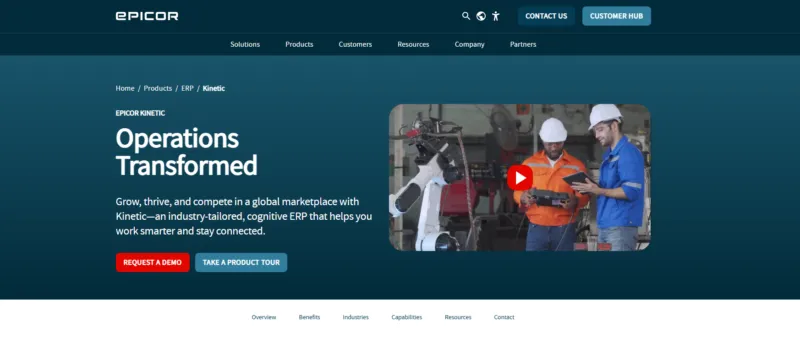
Epicor Kinetic is a cloud-enabled ERP designed from the ground up for manufacturing, distribution, and retail businesses. It has decades of development focused specifically on the needs of businesses that make things, move things, or manage complex operations on a factory floor or across a distribution network. In Australia, it has a strong presence in discrete manufacturing, automotive, electronics, and industrial sectors. OneKloudX joined the Epicor Partner Program in early 2026, bringing locally based consulting and delivery capability to ANZ manufacturers and distributors.
Where Epicor Kinetic Excels
Manufacturing capability is Epicor Kinetic’s defining strength. The platform handles production scheduling, bills of materials (BOM), job costing, capacity planning, shop floor control, and quality management at a depth that generalist ERP platforms rarely match. For a business running a production environment, this specificity translates directly into operational control and profitability.
Epicor Kinetic also performs well in mixed-mode manufacturing environments, meaning businesses that operate across make-to-stock, make-to-order, and engineer-to-order production models can manage all three within the same system without patching together separate tools.
The platform’s supply chain and procurement capabilities are equally mature, supporting businesses that manage complex supplier relationships, long lead times, and multi-tier supply chains as part of their daily operations.
Where to Think Carefully
Epicor Kinetic is purpose-built, and that specificity is both its strength and its boundary. Businesses that are primarily service-based, asset-light, or financially complex across multiple entities may find the platform’s core strengths less relevant to their primary pain points.
Implementation of Epicor Kinetic, particularly for businesses with complex production environments, requires experienced partners and thorough planning. The depth of the system means there is more to configure correctly from the outset.
Epicor Kinetic Is a Strong Fit For
- Discrete manufacturers across industrial, automotive, electronics, and defence sectors
- Engineer-to-order and make-to-order production businesses
- Businesses with complex BOMs, job costing, and shop floor management requirements
- Distributors operating within or alongside manufacturing supply chains
- Organisations where production efficiency and traceability are the central business challenge
Explore OneKloudX’s Epicor Kinetic practice
Side-by-Side: How the Three Platforms Compare
| Feature Area | NetSuite | MYOB Acumatica | Epicor Kinetic |
|---|---|---|---|
| Deployment | Cloud-native | Cloud | Cloud-enabled |
| Primary Strength | Financial management, multi-entity | ANZ compliance, distribution | Manufacturing, production |
| Manufacturing Depth | Moderate | Moderate | Industry-leading |
| ANZ Localisation | Good | Excellent | Good |
| Multi-Entity/Global | Moderate | Moderate | Moderate |
| Licensing Model | Per user | Consumption-based | Per user/module |
| Ecosystem Size | Very large (global) | Strong (ANZ-focused) | Strong (industry-focused) |
| Best Industry Fit | Tech, services, e-commerce, retail | Distribution, construction, services | Manufacturing, distribution |
| Implementation Complexity | Medium to high | Medium to high | Medium to high |
The Questions You Need to Answer Before You Decide
Before you sit down with any ERP partner or watch a product demo, take the time to answer these honestly.
What is the single biggest operational problem you are trying to solve? If the answer is financial visibility and multi-entity reporting, that points in one direction. If it is shop floor control and production costing, that points in another. If it is inventory accuracy and local compliance, that is a third direction entirely.
Where do you expect to be in five years? An ERP system is not a two-year investment. The platform you select today needs to accommodate the business you intend to build, including new markets, new product lines, acquisitions, or changes in your operating model.
What does your team actually look like? ERP adoption lives or dies on user experience. A system that your team finds confusing or counter-intuitive will be underused, regardless of its technical capability.
Who will implement and support you? The platform is only half the equation. The partner who configures, trains, and supports your implementation has an enormous bearing on the outcome. Experience with your industry and your specific platform matters more than most businesses realise until it is too late.
Why a Multi-ERP Partner Changes the Conversation
Most ERP resellers represent a single vendor. Their job, whether they intend it or not, is to fit your business into their platform rather than fit the platform to your business.
OneKloudX is one of the few partners in Australia that holds active practices across all three platforms: NetSuite, MYOB Acumatica, and Epicor Kinetic. That means our recommendation is genuinely independent. We do not have a preferred platform. We have a preferred outcome, and that is finding the right fit for your business, even if it turns out to be a system we did not expect to recommend at the start of the conversation.
Our process begins with understanding your business before we ever open a product brochure.
EVERYTHING YOU NEED TO KNOW
FAQs – Get the answers you need
Ready to Find Your Fit?
The right ERP for your business exists. It might be NetSuite, MYOB Acumatica, or Epicor Kinetic, but the only way to know for certain is through an honest, structured conversation about where your business is today and where it is headed.
That is exactly where we start.
Book a no-obligation discovery call with the OneKloudX team, and let’s find the platform that is built for the business you are building.
Sources: NetSuite Product Overview | MYOB Acumatica Product Page | Acumatica-MYOB Partnership Announcement, July 2024 | Epicor Kinetic Product Page | OneKloudX Partners with Epicor, ARN | OneKloudX Partners with Epicor, Australian Manufacturing
Passionate – Dedicated – Professional
It’s About You
We Solve ERP Problems with Partners and Platforms that work for you, not against you!